
What is Rudbeckia (Coneflower)? Characteristics and Care
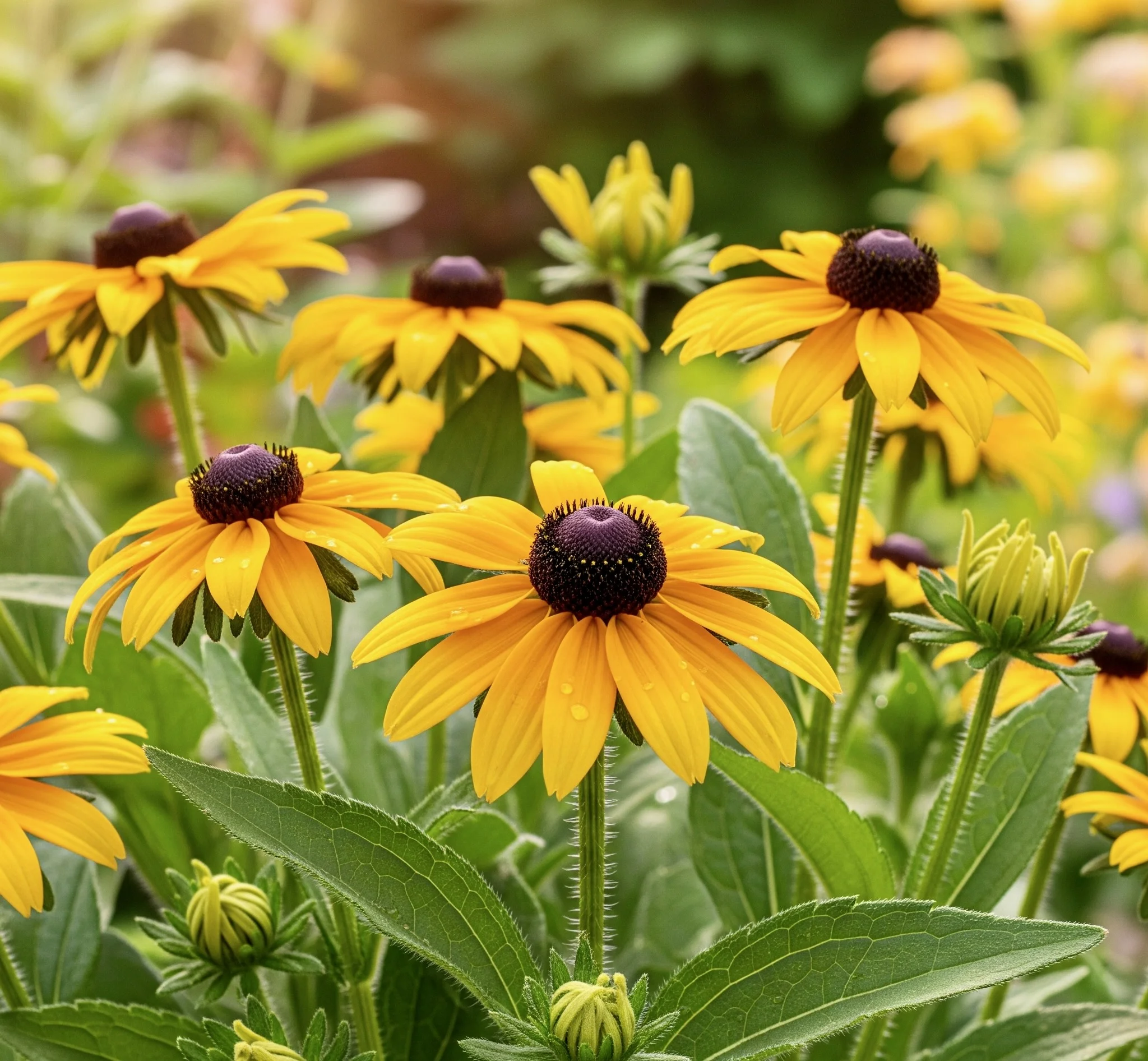
Rudbeckia is a highly resilient ornamental plant belonging to the daisy family (Asteraceae). It is well-known for its bright yellow petals and contrasting dark brown or black centers. Commonly referred to as the Black-eyed Susan or Coneflower, it is native to North America but is frequently preferred in gardens and landscaping projects worldwide.
Key Takeaways from this Description:
- Scientific Family: Asteraceae (Daisy/Sunflower family).
- Visual Identity: Golden-yellow rays with a prominent dark “cone” or disk.
- Popular Name: Often called “Güneş Şapkası” (Sun Hat) in Turkish, which translates closely to its common English association with Coneflowers.
- Origin: Indigenous to North American prairies and open woodlands.
Characteristics of the Rudbeckia Flower
- Latin Name: Rudbeckia hirta (most common species)
- Average Height: 30 cm – 1 meter
- Blooming Period: From mid-summer to early autumn
- Leaf Shape: Lance-shaped, green, and hairy
- Lifespan: Available in both annual and perennial varieties
- Climate Resilience: Blooms abundantly in hot and temperate climates; cold-resistant
Popular Rudbeckia Species
- Rudbeckia hirta: The most common species; usually annual with striking yellow flowers.
- Rudbeckia fulgida: A perennial species known for dense blooming.
- Rudbeckia triloba: A variety with smaller flowers and three-lobed leaves.
- Rudbeckia laciniata: A tall, showy species with deeply lobed (cut) leaves.
How to Grow Rudbeckia
1. Light Requirements
Rudbeckia loves full sun. It blooms most prolifically in areas receiving at least 6 hours of sunlight daily. It can grow in partial shade, but flower production will decrease.
2. Soil Selection
Ideal soils should be:
- Rich in organic matter
- Well-drained
- Slightly acidic to neutral pH (6.0 – 7.5)
3. Watering
The soil should remain moist, but it is crucial that water does not pool at the roots. During summer, deep watering 1-2 times a week is generally sufficient.
4. Temperature and Climate
It grows without issues in temperate climates. While it may shed its leaves in winter, it will revive in spring if the roots are protected.
Care Tips
- Deadheading: Removing faded flowers encourages the plant to produce new blooms.
- Fertilizing: Feeding with organic fertilizer in spring accelerates growth.
- Mulching: Applying mulch before winter helps protect the roots.
- Rejuvenation: Perennial species should be rejuvenated by dividing the roots every 2-3 years.
Propagation Methods
- From Seed: Can be sown directly into the ground in spring or started indoors as seedlings.
- Root Division: The most common method for propagating perennial varieties.
Uses of Rudbeckia
- Landscaping: Garden borders, edgings, and flower beds.
- Cut Flowers: They last a long time in vases.
- Ecological Gardens: They attract bees, butterflies, and other pollinators.
Pests and Diseases
- Fungal Diseases: Leaf spot and powdery mildew.
- Pests: Aphids and thrips.
- Prevention: Ensure regular monitoring and provide good air circulation.
Frequently Asked Questions
Does Rudbeckia die in winter? Perennial species shed their leaves in winter, but if the roots are protected, they will sprout again in the spring.
Is Rudbeckia toxic? Generally, it is not harmful to humans, but it can be mildly toxic to some animals.
How long does Rudbeckia live? Depending on the species, it can be an annual or live for 3-4 years.
Leave a Reply