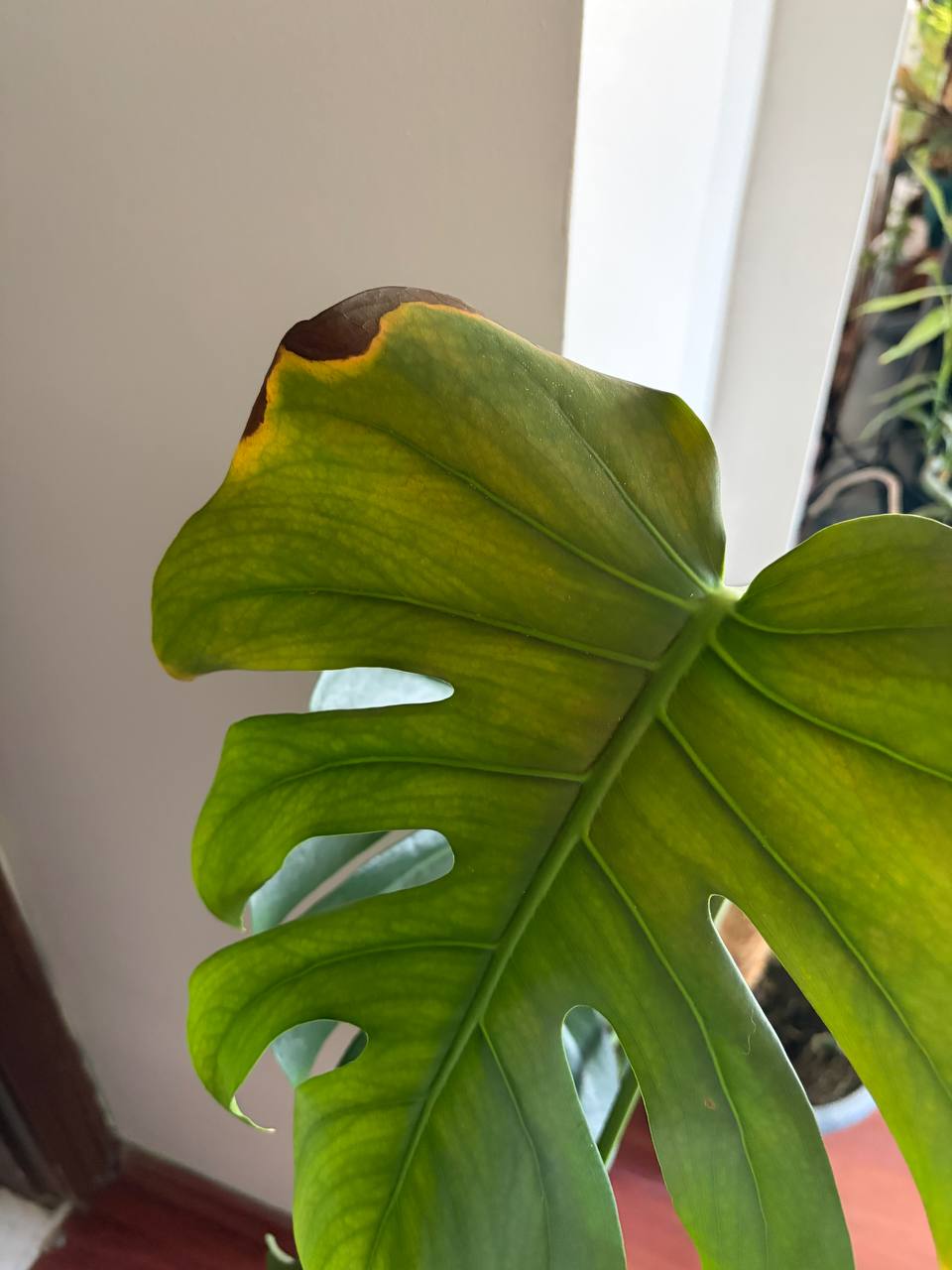
Monstera deliciosa is easily one of the most beloved houseplants, but finding yellow leaves can catch any plant parent off guard. Yellow foliage is your plant’s way of telling you something is out of balance.

1. Overwatering Sitting in soggy soil suffocates the roots and triggers root rot, which turns leaves limp, soft, and yellow.
- The Fix: Let the top 2–3 inches of soil dry out before watering again, and always empty any standing runoff from the saucer.
2. Underwatering & Low Humidity Bone-dry soil or parched indoor air causes leaves to turn yellow with crispy, brown edges.
- The Fix: Stick to a consistent watering routine and bump up ambient humidity by grouping plants, using a pebble tray, or running a humidifier.
3. Lighting Issues Harsh, direct sun scorches the foliage, while dim lighting leaves the plant pale, weak, and unable to photosynthesize properly.
- The Fix: Place your Monstera in bright, indirect sunlight. A sheer curtain across a sunny window works wonders.
4. Nutrient Deficiencies A lack of essential nutrients—especially nitrogen or iron—leads to overall leaf yellowing and sluggish growth.
- The Fix: Feed with a balanced, diluted liquid houseplant fertilizer once a month throughout the active spring and summer growing seasons.
5. Natural Aging As a Monstera matures, it naturally sheds its oldest, lowest leaves to direct energy toward new growth.
- The Fix: No need to worry—just prune away the dying leaf with clean, sanitized shears.

Quick Tips for a Thriving Monstera
- Always use a pot with functional drainage holes.
- Plant in a chunky, well-aerated potting mix (a blend of peat/coco coir, perlite, and orchid bark is ideal).
- Hold off on fertilizing during the winter dormancy period.
- Check the undersides of leaves regularly to catch any pests early.

Leave a Reply